
Showing the single result
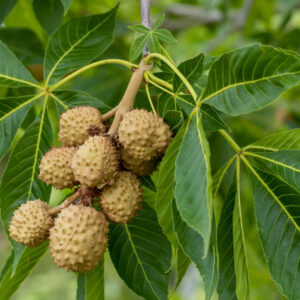
Buckeye (Aesculus spp.) is a deciduous tree or large shrub native to North America, celebrated for its showy, upright clusters of flowers and distinctive palmate leaves. Typically growing 20–50 feet tall, Buckeye displays a rounded crown with compound leaves composed of five to seven leaflets that provide a lush, green canopy in summer, turning golden to yellow in fall. In spring, the tree produces striking clusters of tubular flowers—white, yellow, or pink depending on the species—attracting bees, butterflies, and hummingbirds. It thrives in rich, well-drained soils with full sun to partial shade and tolerates a range of climates. The seeds, known as buckeyes, are toxic to humans but are consumed by some wildlife, while the dense foliage and branching offer shelter and nesting sites for birds and small mammals. Valued both for its ornamental beauty and ecological contributions, Buckeye adds seasonal interest and wildlife support to landscapes and natural areas.