
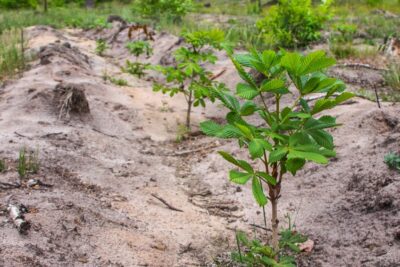
Different growing conditions present different challenges, but choosing plants that are naturally adapted to your property’s environment can make establishing a healthy landscape much easier. Whether you’re dealing with excess moisture, limited sunlight, or exposed terrain, understanding what to look for can help you narrow your options.
Evaluate Your Growing Conditions Before Choosing Plants
Not every planting site has ideal growing conditions. Before selecting trees and shrubs for your property, take some time to understand what you’re working with. Even different areas of the same yard can have significantly different growing conditions.
Consider the following factors:
- Soil moisture and drainage: Does water collect after rainfall, or does the ground dry out quickly? Persistent standing water can indicate drainage problems.
- Sunlight exposure: Does the area receive full sun, partial shade, or deep shade? Observe how sunlight changes throughout the day.
- Soil composition: Is your soil sandy, clay-heavy, rocky, or compacted? Soil structure influences drainage, aeration, and root development.
- Wind exposure: Are plants exposed to strong, drying winds, particularly during winter?
- Available space: Consider overhead obstacles, underground utilities, and the plant’s mature height and spread.
Your region’s USDA Plant Hardiness Zone is another important consideration. A species may tolerate your soil conditions but still struggle with your local winter temperatures.
Choosing Trees and Shrubs for Challenging Sites
Different environmental challenges call for different plant characteristics. Some trees and shrubs are naturally adapted to wet soils, while others are better suited to dry conditions, limited sunlight, or exposed locations. Understanding these differences can help you identify species that are more likely to establish successfully and remain healthy over time.
Wet or Poorly Drained Soil
Excess moisture can limit oxygen availability around plant roots, potentially leading to poor growth or root rot. Look for species naturally adapted to consistently moist soils or periodic flooding, depending on your site’s conditions. Keep in mind that plants suited to occasional moisture may not tolerate prolonged standing water.
Trees and shrubs to consider: Red maple, silky dogwood, buttonbush, and certain willow species.
Dry or Sandy Soil
Sandy soils drain quickly and may struggle to retain moisture and nutrients. Look for species with established drought tolerance that can handle drier growing conditions. However, even drought-tolerant plants require consistent watering while their root systems become established.
Trees and shrubs to consider: Eastern red cedar, northern bayberry, and certain pine species.
Limited Sunlight
Shaded areas can present challenges because plants receive less sunlight for photosynthesis, potentially slowing growth and development. Look for shade-tolerant species, keeping in mind that some plants thrive in partial shade while others can tolerate deeper shade.
Trees and shrubs to consider: Eastern hemlock, spicebush, and certain viburnum species.
Windy or Exposed Locations
Strong winds can damage branches, dry out foliage, and increase moisture loss, particularly during winter. Look for wind-tolerant species suited to your climate and soil conditions. Planting suitable trees and shrubs in windbreaks can also help reduce wind exposure across your property.
Trees and shrubs to consider: Eastern red cedar and Black Hills spruce.
Poor, Compacted, or Rocky Soil
Poor soil quality can restrict root growth, limit access to nutrients, and make it difficult for plants to establish. Look for species adapted to relatively infertile or rocky soils. Severely compacted areas may require additional site preparation to improve drainage and create suitable conditions for root development.
Trees and shrubs to consider: Eastern red cedar and fragrant sumac.
Remember: While these species may be suitable for challenging growing conditions, their success also depends on your region’s climate, USDA Hardiness Zone, and specific site characteristics. Always consider the individual growing requirements of each species before planting.
Help Your Trees and Shrubs Establish Successfully
Even well-matched plants need proper care during establishment. When planting bare-root trees and shrubs, pay particular attention to root handling, planting depth, and moisture.
A few important practices include watering according to soil conditions, applying mulch without piling it against trunks, and protecting young plants from wildlife when necessary.
Avoid assuming that extra fertilizer, frequent watering, or soil amendments can overcome an unsuitable location. Long-term success starts with choosing plants adapted to your site’s conditions.
Find the Right Trees and Shrubs for Your Property
Challenging growing conditions don’t have to limit your landscaping possibilities. With the right plant selection and establishment practices, you can create attractive, functional plantings suited to your property’s environment. At Cold Stream Farm, we offer a wide selection of bare-root trees and shrubs for everything from residential landscaping to conservation and restoration projects. Explore our plant varieties and planting resources to help you choose suitable options for your next project, or contact our team with questions about our selection.