
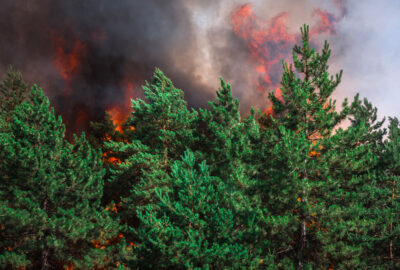
Wildfires are a natural part of many landscapes, but in recent years, they’ve been growing larger, spreading faster, and causing more damage than ever before. While weather and terrain play a role in how a fire behaves, one of the biggest factors is the amount of flammable vegetation in its path — what fire experts call the “fuel load.”
Managing that fuel load can slow a wildfire down, make it easier to control, and, in some cases, stop it from reaching homes and communities. And surprisingly, trees — when chosen, placed, and cared for the right way — can be one of the most effective tools for doing exactly that.
At Cold Stream Farm, we’ve seen firsthand how strategic tree planting can create healthier landscapes that also help limit wildfire risk. Let’s look at why fuel loads matter, how trees can help, and what steps you can take to make your property more fire resilient.
Why Fuel Load Matters in Wildfires
Fuel load simply means the amount of burnable material in an area — leaves, pine needles, dry grass, branches, and dead wood all count. The more of it there is, the hotter and faster a wildfire can spread.
In a high fuel load area, even a small spark can grow into a crown fire, racing from treetop to treetop. In a lower fuel load environment, a fire is more likely to stay close to the ground, burn less intensely, and be easier to contain.
The goal isn’t to strip the land bare. It’s about replacing highly flammable vegetation with less flammable alternatives, managing spacing, and keeping plants healthy so they’re harder to ignite.
How Trees Can Reduce Fuel Loads
It may seem counterintuitive to use trees to fight fire, but when you select the right species and manage them properly, they can help in several ways.
1. Fire-Resistant Trees Slow Flames
Some trees simply don’t catch fire as easily as others. They might have thicker bark, more moisture in their leaves, or fewer flammable oils. Deciduous hardwoods like oaks and maples tend to be far less flammable than resin-heavy conifers like pines and spruces.
By planting fire-resistant species in key areas, you create natural “speed bumps” for fire, making it harder for flames to keep moving.
2. Proper Spacing Breaks the Fire’s Path
When tree canopies are packed too close together, flames can jump from one crown to another. But with enough space between trees, the fire has to slow down or drop back to the ground before it can move forward.
The same principle applies vertically. If shrubs and low branches connect the ground to the treetop, they form a “ladder” that fire can climb. Removing those ladder fuels is one of the simplest and most effective ways to protect your trees.
3. Healthy Trees Retain Moisture and Shade the Ground
A well-watered, healthy tree is much harder to ignite than one stressed by drought or disease. Trees also shade the ground, helping keep surrounding vegetation moist for longer into the dry season. This means fewer brown, brittle plants ready to catch fire at the first ember.
4. Replacing High-Risk Vegetation with Trees
In many areas, removing highly flammable shrubs or invasive plants and replacing them with fire-resistant trees can lower overall fire risk. This works especially well in transitional areas between open fields and forest edges, or between wildland and developed areas.
Best Practices for Fire-Safe Tree Planting
If you want to use trees as part of your wildfire defense strategy, planting is just the beginning. What you plant, where you plant it, and how you maintain it all matter.
Choose the Right Species
Look for trees that are known for being less flammable. These typically have:
- Moist, broad leaves
- Thick bark for insulation
- Little to no resin or oil content
Some excellent fire-resistant options we offer at Cold Stream Farm include:
- Bur Oak (Quercus macrocarpa) – Extremely durable with thick bark
- Sugar Maple (Acer saccharum) – Moist foliage and vibrant fall color
- Black Walnut (Juglans nigra) – Strong wood and low flammability
- Eastern Redbud (Cercis canadensis) – Compact and ornamental with low fire risk
Give Trees Room to Grow
Plan for the mature size of your trees when spacing them. Generally, you’ll want 10–15 feet between canopies near homes or structures. This spacing can be increased in high-risk areas for added protection.
Also, avoid planting too close to roofs, decks, or wooden fences. Those structures can act as fuel if fire gets too close.
Remove Ladder Fuels
Keep the lowest branches of mature trees at least 6–10 feet above the ground. Clear away tall grass, brush, and deadwood near trunks. This keeps ground fires from climbing into the canopy.
Maintain Tree Health
Trees that are stressed by drought, pests, or poor soil are more likely to shed flammable dead material — and more likely to ignite. Water them in dry periods, prune out dead limbs, and use mulch that won’t easily catch fire.
Trees as Part of a Bigger Fire Management Plan
While planting and caring for trees can help reduce fuel loads on your property, they work best as part of a layered approach to wildfire safety.
One common strategy is to divide the area around a home or structure into zones:
- Zone 1 (0–30 feet from the structure): Keep vegetation low and well-maintained. Use mostly fire-resistant plants and remove anything that can ignite easily.
- Zone 2 (30–100 feet): Place well-spaced, fire-resistant trees and shrubs. Keep grasses mowed and remove ladder fuels.
- Zone 3 (beyond 100 feet): Thin dense stands of trees and remove dead or downed material to reduce large fuel loads.
Post-Fire Recovery and Replanting
In areas recovering from wildfire, tree planting can be a powerful tool for restoring the land — and preventing future fires. Bare root seedlings are especially useful for large replanting projects because they’re affordable, easy to transport, and quick to plant.
Choosing native, fire-resistant species not only lowers the risk of future fires but also restores habitat for wildlife and stabilizes soil against erosion.
Balancing Fire Safety with Wildlife Habitat
One of the best things about using trees for fuel load reduction is that you don’t have to sacrifice biodiversity. Many fire-resistant trees also provide food and shelter for birds, deer, pollinators, and other wildlife.
For example:
- Bur Oak – Produces acorns for squirrels, turkeys, and deer
- Black Cherry – Offers fruit for birds
- American Basswood – Flowers that attract bees and butterflies
With the right mix, you can have a landscape that’s both fire-wise and wildlife-friendly.
Reducing wildfire risk isn’t just about clearing vegetation — it’s about managing it smartly. The right trees, planted in the right places and maintained the right way, can be one of your most effective defenses against destructive fires.
By replacing flammable vegetation with fire-resistant trees, keeping them healthy and well-spaced, and integrating them into a defensible space plan, you can lower fuel loads and help protect your property.
At Cold Stream Farm, we can help you find the wholesale trees and shrubs that fit both your fire safety goals and your landscape vision. Whether you’re restoring land after a fire, protecting a home, or building a wildlife-friendly buffer, we have the bare root trees to make it happen. Contact Cold Stream Farm at (231) 464-5809 today or visit us online for more information!